nice to meet you
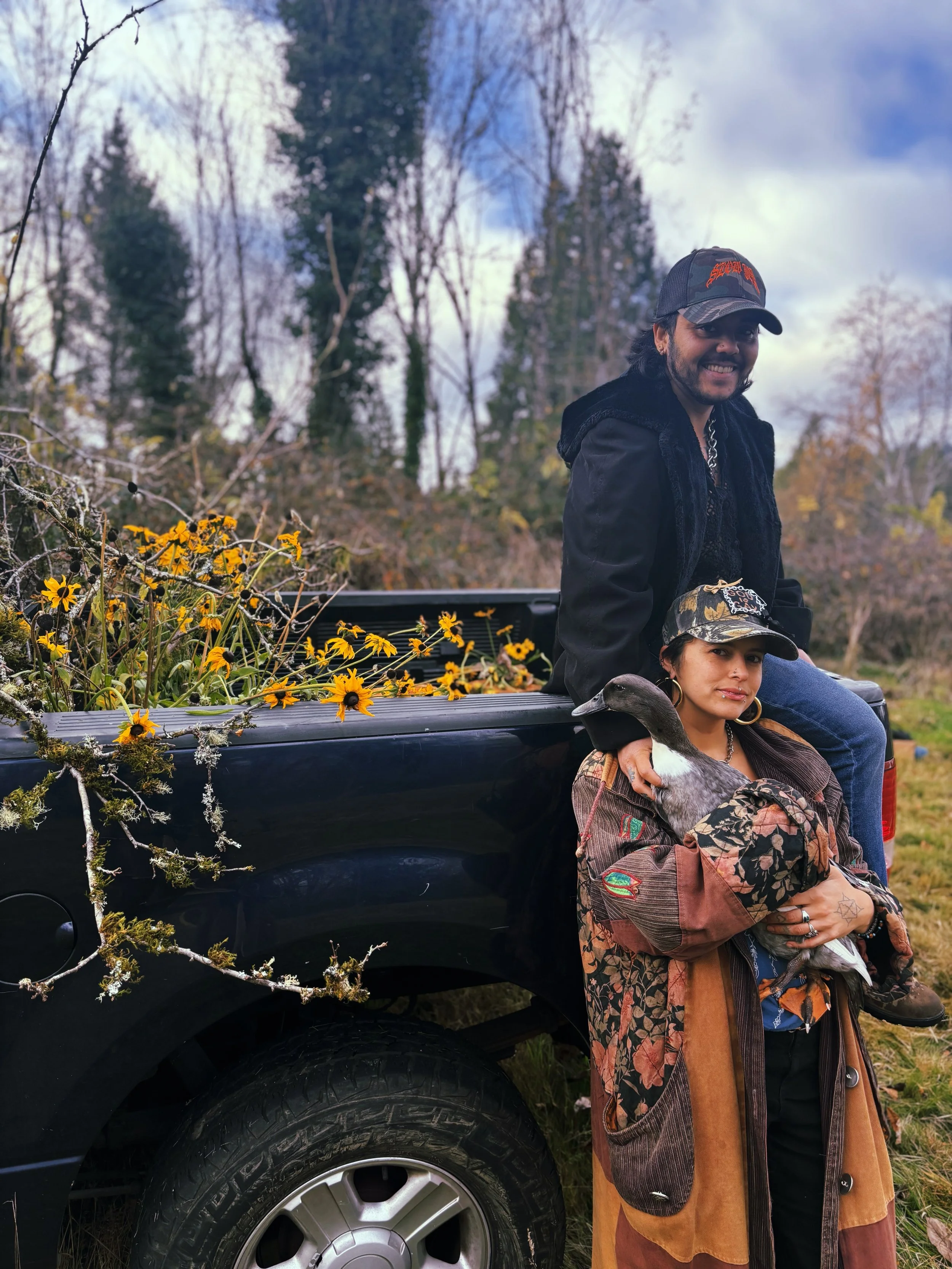
We are a non-binary mixed brown duo, Leah (they/them) and Nik (they/them), who are rooted in liberation, sustainability and reciprocity.
Holy Basil was birthed out of the call to light the embers of remembrance of our plant allies and their place in our collective healing to our community. Holy Basil was the first plant friend Leah built relationship with, and it is with their medicine that we are able to brew the magic.
Through cultivation of a native plant garden, we nurture deep relationship to the herbs we then offer in the apothecary. We also foster friendship with our wildcrafted medicine, keeping our remedies local to the PNW.
Leah is a trained herbalist, who is ever learning from fellow indigenous, black + brown practitioners. Leading their practice in re-indigineity and anti-capitalism.
We use 90% PNW ingredients:
We are dedicated to reducing our carbon foot print and producing the freshest products! That is why the majority of our ingredients are grown and foraged in the PNW, likely our own backyard. We make apple cider vinegar from our apple tree, and use the honey from our friends bees. When we do source outside our own abilities, we make sure the product is natural and created with as much care as we put into our creations.
why we do what we do
Why single herb solutions:
We have many single herb remedies because we believe less is more. Especially when introducing new herbs to your life, it is important to take the time to get to know the plant and build relationship to it. This helps integrating the medicine and for you to truly notice its effects (or not!)
Queering herbalism:
Herbalism spaces are often filled with language about this being woman’s work and that doesn’t leave a lot of space for those of us outside binary concepts. The rest of nature doesn’t live within them so why should we?Plus, roles for trans folk as healers have always existed. By deepening relationship to our kin plants, we engage with the living world the same way we live our lives, deconstructed and in our own ways. We aim to create a space where other queer and marginalized folx feel safe and seen in this engagement.